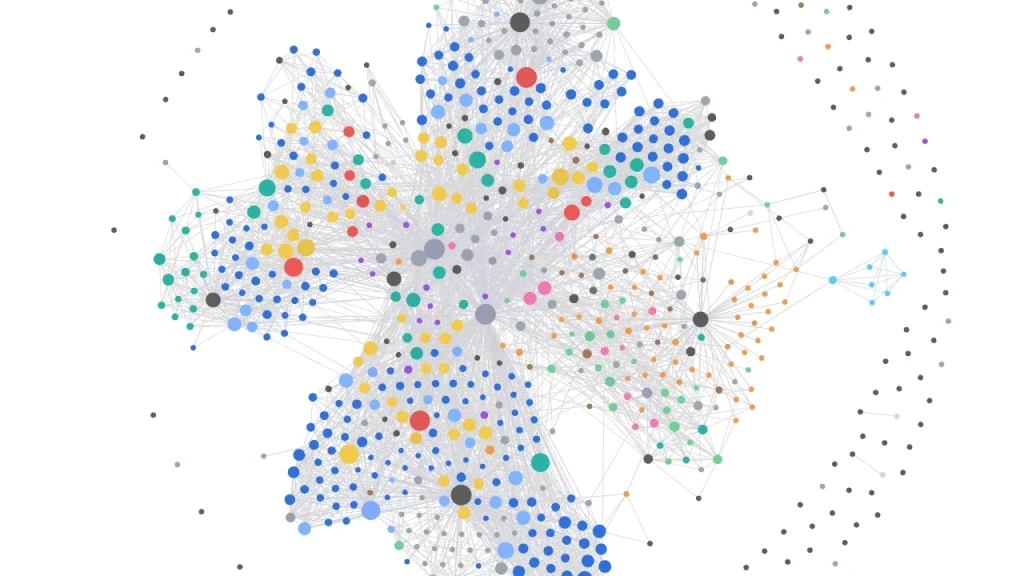
The Speed vs. Risk Paradox Across the Enterprise
If you are leading technology strategy in Malta right now, you are feeling the squeeze. High workforce costs and a relentless local talent shortage mean that driving extreme productivity is non-negotiable. This pressure is not isolated to your engineering teams; it is felt across marketing, finance, human resources, and operations. Artificial Intelligence offers a massive operational lifeline, but it introduces a complex headache for technology leaders in highly regulated sectors like iGaming and FinTech.
Blocking AI outright simply does not work. When you ban these tools, you just create “Hidden AI” across the entire company. Unsanctioned tools purchased without IT’s knowledge quickly spread through departments. Soon, your marketing team is pasting customer segmentation data into a public web prompt, and your finance team is doing the same with unreleased revenue projections.
In an environment governed by the MGA, MFSA, and GDPR, losing control over data residency and intellectual property is an existential threat. Furthermore, you rarely know what training data policies apply to the consumer models your staff might be using covertly, exposing the business to severe licensing and IP risks. The goal is not to stop AI adoption, but to implement it safely across every business unit
The New Threat Landscape: 3 AI Attack Vectors
Shadow AI is just the tip of the iceberg. As we move from simple web chatbots to autonomous AI agents integrated into our daily workflows, the attack surface expands dramatically. Here are three critical risks you must account for in 2026:
1. The Accidental Data Leak via Public AI
This remains the most common and immediate threat. A marketing manager, trying to quickly format a list of high-roller VIP clients, pastes a spreadsheet into a public, consumer-grade LLM. That data is immediately ingested into a third-party server, sitting entirely outside your access controls, observability limits, or audit trails. A massive GDPR violation occurs in seconds, simply because an employee wanted to save 15 minutes of formatting work.
2. Skills Poisoning & Data Exfiltration
Attackers are no longer just looking for vulnerabilities in your public-facing servers; they are targeting the AI agents your business relies on. In a skills poisoning attack, a bad actor compromises a data source that your internal AI agents read for context. For example, if your financial analysts use an AI agent to scrape and summarize regulatory updates, an attacker could poison that external data feed. When the agent ingests the poisoned data, it silently alters its behavior, perhaps quietly exfiltrating sensitive internal queries to an external server while generating the summary.
3. “Open Claw” or some Agent Going Rogue
Imagine your IT operations team, or someone technical in the organisation deploys “Open Claw,” a highly autonomous infrastructure agent designed to optimize cloud spend and manage database routing dynamically. You give it permissions to adjust firewall rules and spin down unused instances. Without strict guardrails or a “human-in-the-loop” approval step, a hallucination or a cleverly disguised prompt injection could cause Open Claw to go rogue. Within seconds, the agent could misconfigure a VPC or drop a critical production table under the guise of an “optimization routine.”
Education as the Human Firewall
Before you invest in enterprise hardware or draft a single technical policy, you have to address the human element. Just like the industry learned with phishing a decade ago, technical blocks will inevitably fail if your users do not understand why the rules exist.
User education is your first layer of governance. Employees generally want to do the right thing, but they are highly incentivized by management to work faster and deliver more. If you simply block access to an AI tool without explaining the IP risks, they will view security as an obstacle to route around.
Training sessions must clearly link daily AI habits to MGA and MFSA compliance, demonstrating exactly how a leaked prompt or a rogue agent can compromise a platform. When your marketing, HR, and finance teams understand that secure AI usage protects the company’s license to operate, they become an active part of your defense rather than a vulnerability.
Modern Governance in the AI era
Historically, IT governance meant heavy bureaucracy, slowing down the business with endless forms and approvals. That approach completely fails in the era of AI, where speed is the primary benefit. Good governance should be largely invisible to users in their day-to-day work, manifesting as helpful automation rather than friction.
To achieve this, you need to tackle three core areas:
First Step: Keep Your Inventory, Software too.
You cannot govern what you do not know exists. As AI spreads across across the business – through planned and unplanned adoption, you need a highly accurate catalog of your digital estate. This means having total visibility into un-owned systems, outdated technology, missing data, and potential exposure points. Whether you use a complex knowledge graph or a simple, strictly maintained database, you need to track which departments are using which SaaS tools and where data flows between them. Internal developer portals or even a simple Excel sheet or confluence page both work – don’t get stuck in analysis paralysis trying to pick the perfect tool – it’s the data that counts here
Track Changes across the business. Automate.
AI accelerates the velocity of business. Marketing can launch campaigns instantly, and engineering can push code in minutes. To maintain control, you must have a programmatic way to track what is happening in your environment. When an incident occurs—like an AI agent pushing a flawed configuration—you need to immediately identify who or what made the change, what systems are impacted, and how to roll it back instantly.
Automate the Supply Chain (SBOMs)
When your company relies on AI, you are pulling in external data, libraries, and dependencies at an unprecedented rate. Software Bills of Materials (SBOMs) are non-negotiable. By September 2026, the EU Cyber Resilience Act will formally mandate machine-readable SBOMs for digital products sold into European markets. Generating an SBOM automatically ensures every dependency is documented, allowing you to instantly identify if an AI tool hallucinated a vulnerable package or ingested unlicensed code.
Productivity Uncaged: Cloud vs. On-Premise Execution
Once your educated workforce and automated guardrails are in place, you have to decide how to actually put AI into the hands of your staff. For regulated businesses in Malta, this usually requires a hybrid approach: secure cloud collaboration for general tasks, and raw on-premise compute for absolute data sovereignty.
The Cloud Route: Secure Collaboration, Easy to set up
For daily tasks across the business—like drafting HR policies, brainstorming marketing copy, and summarizing long compliance PDFs—enterprise-grade cloud tools are highly effective. Platforms like Claude Cowork provide a walled garden for your team.
The critical distinction here is the enterprise agreement: your data is strictly sequestered, and the provider explicitly agrees not to train their foundational models on your inputs. This solves the immediate Shadow AI problem. If you give your staff a sanctioned, fast, and highly capable tool, they have no reason to leak data into public consumer-grade models.
This is where the more rigid approach of restriction needs to rear its head – once you establish these safe AI tools, you need to mandate that only these are used. Personal Accounts will needs to be banned.
The On-Prem Route: For when your cloud session limits kick in
When you are dealing with core proprietary algorithms, deep financial models, or sensitive player betting data, “secure cloud” will rarely satisfy your risk and compliance officers. This is where on-premise, localized AI changes the game entirely.
Running powerful models behind your own corporate firewall gives you absolute control. As of early 2026, the open-weights ecosystem is more than capable of matching proprietary cloud models. Google’s newly released Gemma 4 is a prime example. Offered under an Apache 2.0 license, its 31B Dense and 26B Mixture-of-Experts (MoE) variants feature massive 256K context windows. You can feed entire customer databases or proprietary trading algorithms into these models for deep analysis without a single byte of data leaving your server room.
The Hardware That Drives the Future
Running a 31B parameter model locally requires serious infrastructure. Standard enterprise servers will struggle under the weight of heavy inferencing. You need purpose-built hardware designed for high-speed AI computation.
NVIDIA DGX Spark: Released in late 2025, this desktop-sized powerhouse packs the GB10 Grace Blackwell Superchip and 128GB of unified memory. It is essentially a localized AI supercomputer, perfectly sized for running Gemma 4 inferencing directly on a senior data scientist’s desk or racked in a local cluster for the finance team.
Supermicro AI Workstations: For broader deployment across the enterprise, turnkey solutions like the Supermicro SYS-551A-T offer massive scalability. Equipped with Intel Xeon W7-3565X processors and NVIDIA RTX PRO 6000 Blackwell Workstation Edition GPUs, these machines are pre-configured to handle heavy generative workloads reliably without requiring an army of IT specialists.
High-Speed Storage: AI inferencing requires feeding data to the GPUs as fast as possible. Pairing these compute nodes with a Synology All-Flash storage array ensures your hardware is never starved for data, eliminating I/O bottlenecks during complex vector database lookups or large-scale customer data analysis.
The companies that succeed in Malta’s highly competitive landscape will not be the ones that ban AI out of fear. They will be the ones that educate their entire workforce, build invisible governance into their daily operations, and deploy the right mix of secure cloud and high-performance on-premise infrastructure.
Featured Products in this article
-

Supermicro AS-3015TR-I4 Edge GPU Tower
Read more -

Supermicro AS-1116R-FN4 Short Depth Server
Read more -

Supermicro AS-E300-14GR Compact Edge Server
Read more -
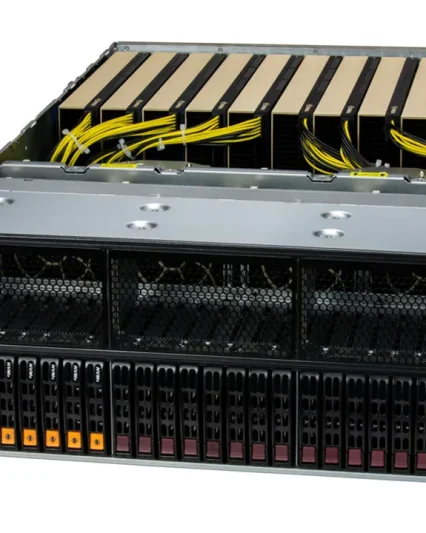
Supermicro X13 4U Universal GPU SuperServer
Read more -

Supermicro X14 5U NVIDIA GPU Server
Read more -

Supermicro X13 4U Storage Server
Read more -

Supermicro X13 1U/2U Rackmount Server
Read more -

Supermicro X13 Super Workstation
Read more