
Zebra ATR7000 RFID Locationing Reader
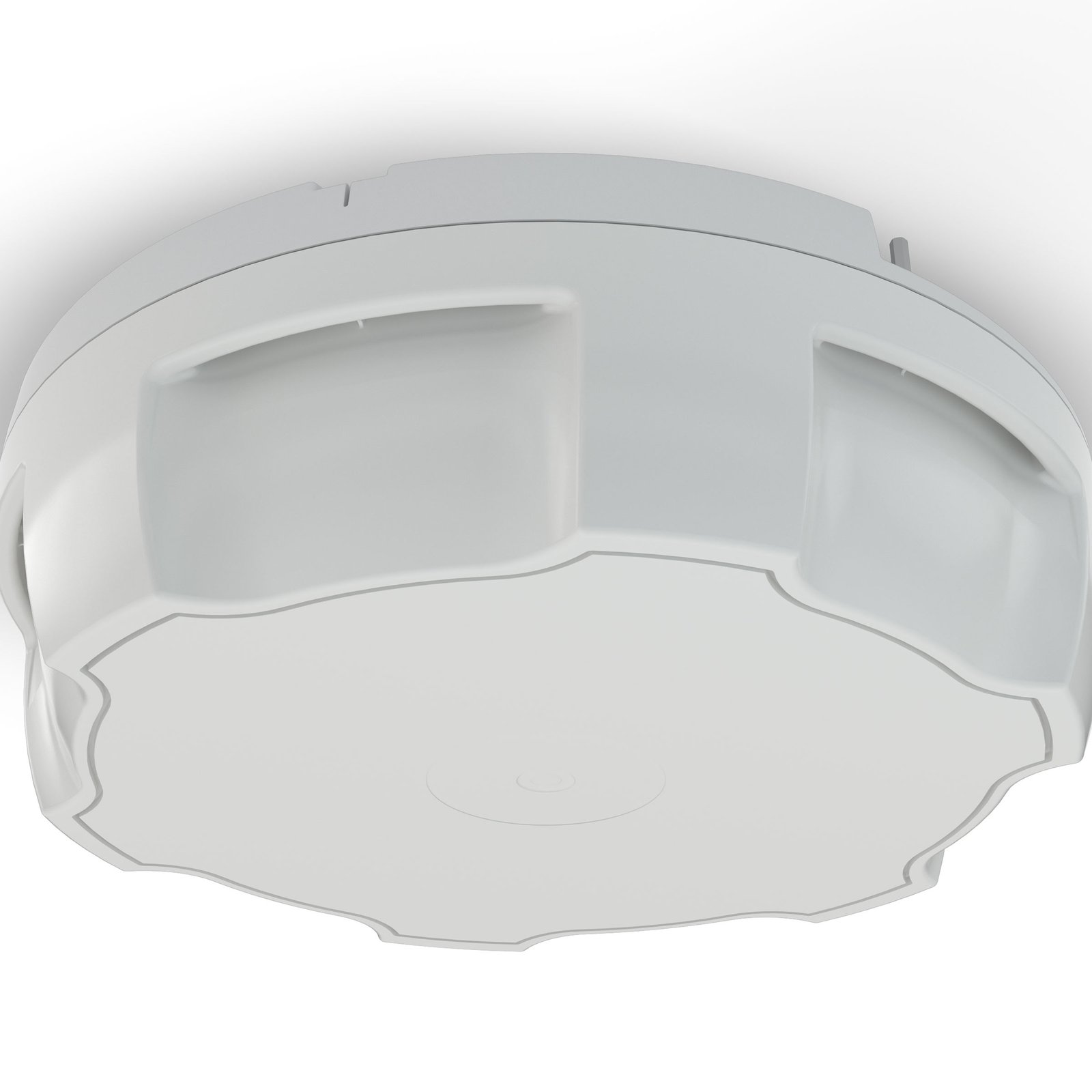
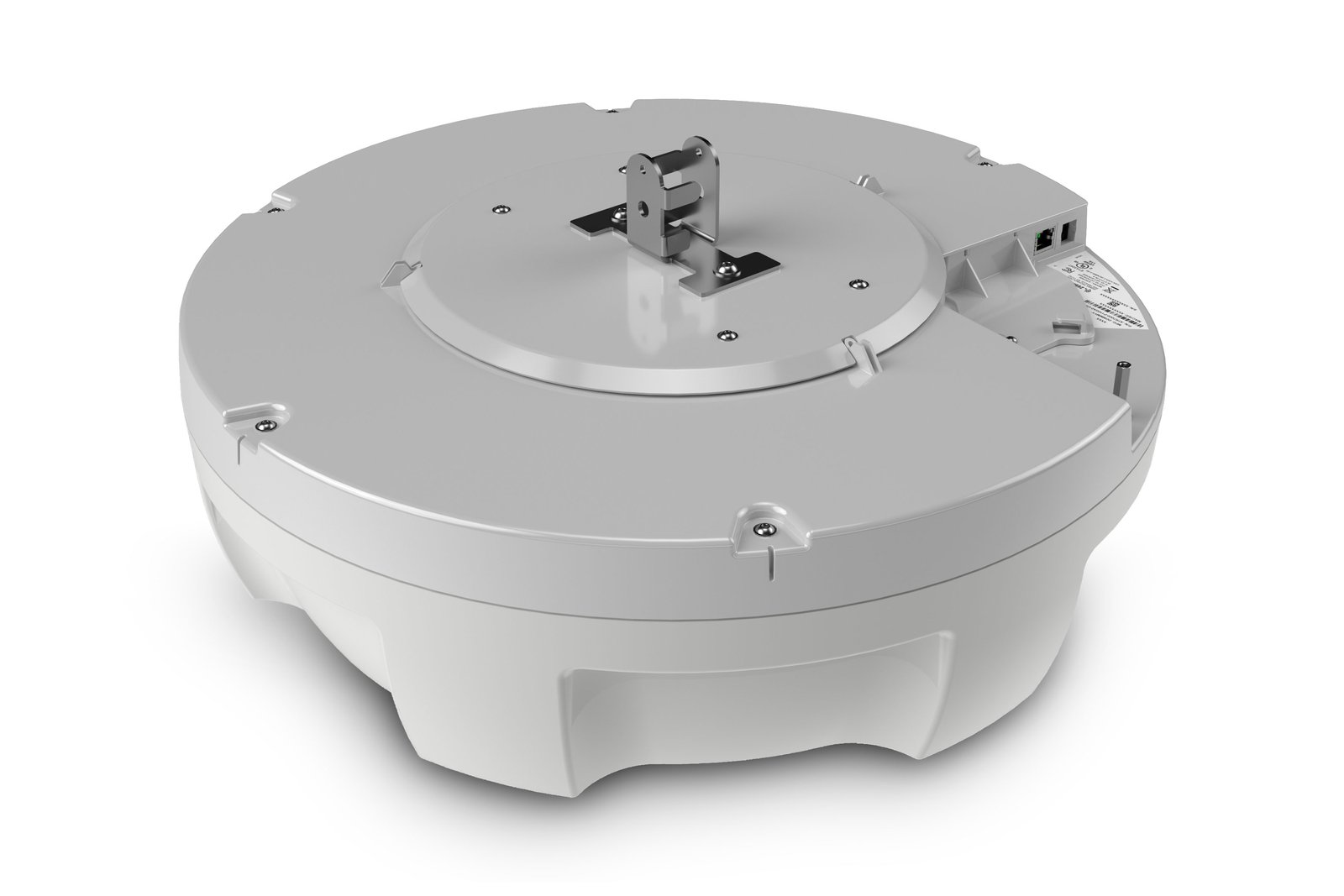
The Zebra ATR7000 is an overhead UHF RFID reader for a real-time location system (RTLS). Its steerable antenna array reads in every direction beneath it, places tags typically within 0.6 m (Zebra figure) and tracks their direction through four or six zones. It is an indoor reader, sealed to IP51, and runs on Power over Ethernet Plus. Part code ATR7000-P2100A0-E8.
Price on request · Request a quote or call (+356) 2138 5911 · Download Spec Sheet
We supply, set up and support Zebra RFID readers in Malta.
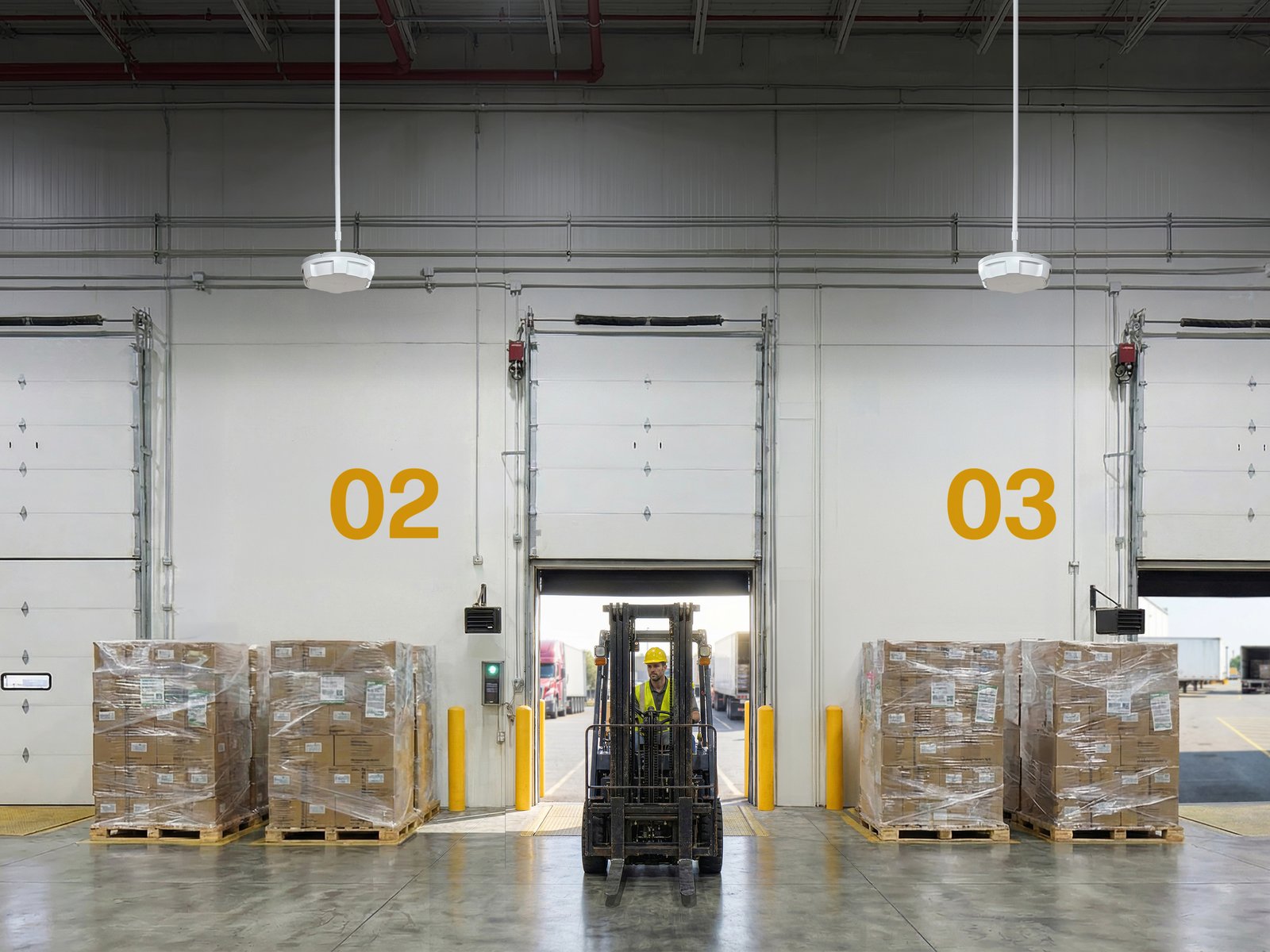
The Zebra ATR7000 is the overhead reader in a real-time location system (RTLS). It is built for halls where staff lose time looking for tagged pallets, cages, trolleys or tools. A reader at a door records that an item went through it. The ATR7000 hangs from the ceiling, reads the tags below it in every direction and reports which zone each tagged item is in and which way it is moving. This is zone-level location from passive UHF tags, typically within 0.6 m according to Zebra. It is not an active-tag system, so the tags carry no batteries.
Location across a site needs Zebra’s CLAS software, licensed separately and quoted with the readers. The ATR7000 fits the warehouse automation work Sirap sets up and sits in the Zebra range Sirap supplies in Malta. Sirap is a Zebra RFID Specialist.
What is the Zebra ATR7000 for?
Sites that need to know where tagged items are inside a building, and when they move, use the Zebra ATR7000. Zebra names it for manufacturing and for warehousing, transport and logistics: parts and assemblies, trolleys, tools, forklifts, finished goods, packages and freight. It mounts above portals, dock doors, entry and exit areas and large open floors.
At a loading dock the ATR7000 shows whether tagged goods are going into a truck or coming out, and Zebra says one reader can cover two dock doors.
How the Zebra ATR7000 locates a tagged item
In a real-time location system (RTLS), the Zebra ATR7000 is the reader overhead. Its steerable phased-array antenna sits in a 482.6 mm disc and reads the floor around and below it.
Location accuracy. The array steers several hundred narrow beams at once, through 360° around the reader and from 0 to 60° in elevation. Zebra rates the location accuracy as typically better than 0.6 m. With Zebra’s licensed CLAS software the figures are 0.6 m at R50 and 1.2 m at R95.
Direction of travel. One ATR7000 splits the area beneath it into four or six reporting zones. It records tags as they cross from one zone to the next, along an aisle or through a transition point. That works whether the item is standing still or on a moving forklift.
Passive tags. The ATR7000 reads standard passive UHF tags (EPC Class 1 Gen2, ISO 18000-63). Passive tags have no battery to monitor or change, so tagging large numbers of items and assets is practical.
Getting ATR7000 location data into your WMS or ERP
Tag reads and locations from the Zebra ATR7000 reach your own software through Zebra’s location software and standard interfaces.
Location data for the warehouse system. CLAS (Configuration and Location Analytics Software) has two parts. The RTLS server sets up, manages and monitors every ATR7000 on the site. The location analytics engine triangulates tag data from one or more readers and publishes each tag ID and its location on a Kafka interface. From there it goes into the system you choose, such as a WMS. Zebra’s example: a worker finishing a put-away is given a pick order for the return trip.
One reader to start. According to Zebra, a single ATR7000 is plug-and-play and sets up an RFID zone that starts tracking tags straight away. The Zebra RFID API lets your application use the reader’s tag location data; the sheet also lists .NET, C and Java EMDK host support.
Standard interfaces. The reader speaks LLRP v1.0.1 over Ethernet. Zebra’s IoT Connector sends its data over MQTT or REST and is set up without coding. Zebra Resonate RFID Reader Management configures and monitors the cloud-ready Zebra RFID readers in a system from one application.
Installing the Zebra ATR7000
Each Zebra ATR7000 is one unit with the antenna array inside, so the install is a mount, a network cable and the set-up.
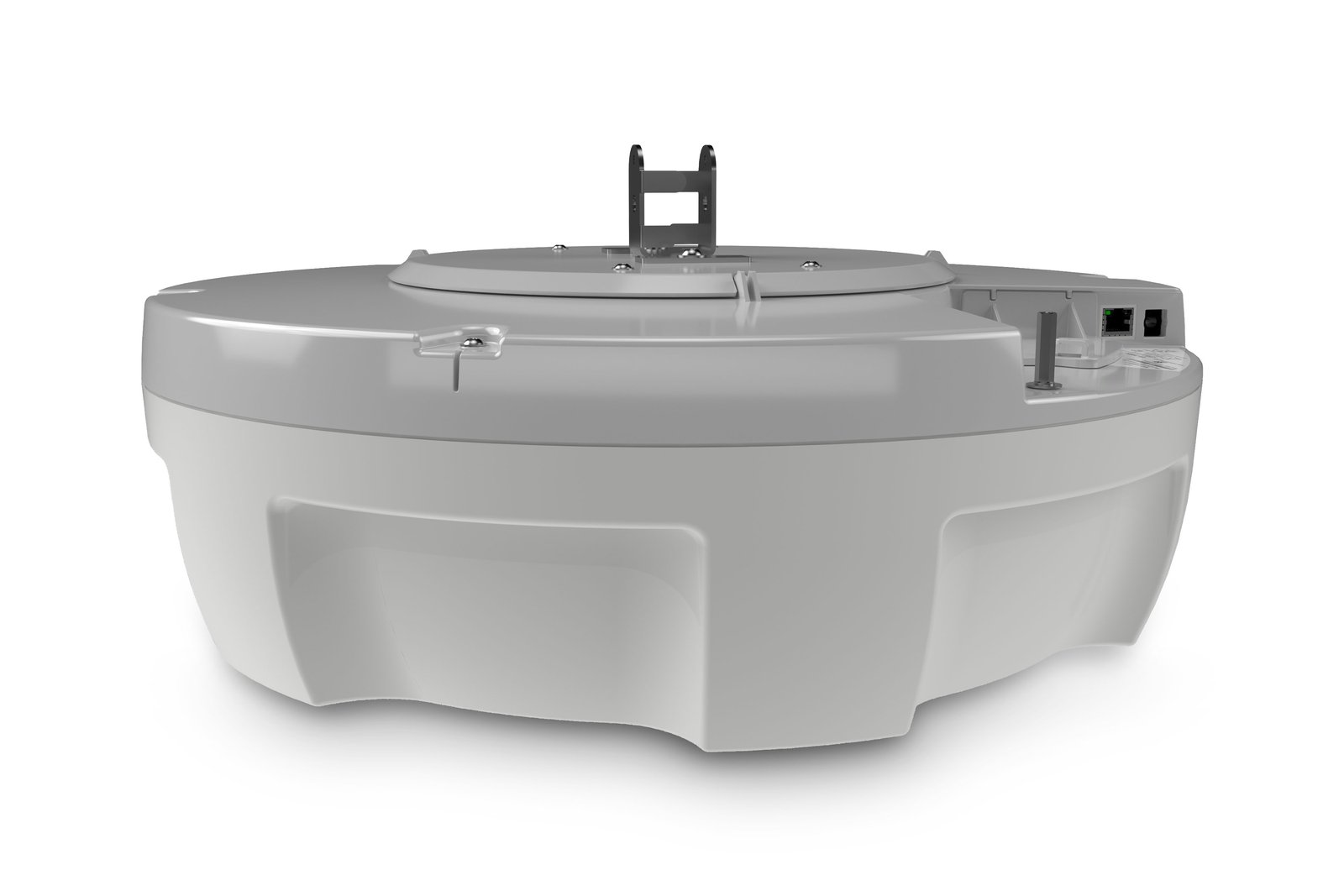
Power. The ATR7000 runs on Power over Ethernet Plus (802.3at), so no power outlet is needed at the ceiling; a +24 V DC supply rated 3.25 A is the alternative. It draws 24 W at most and under 4 W idle.
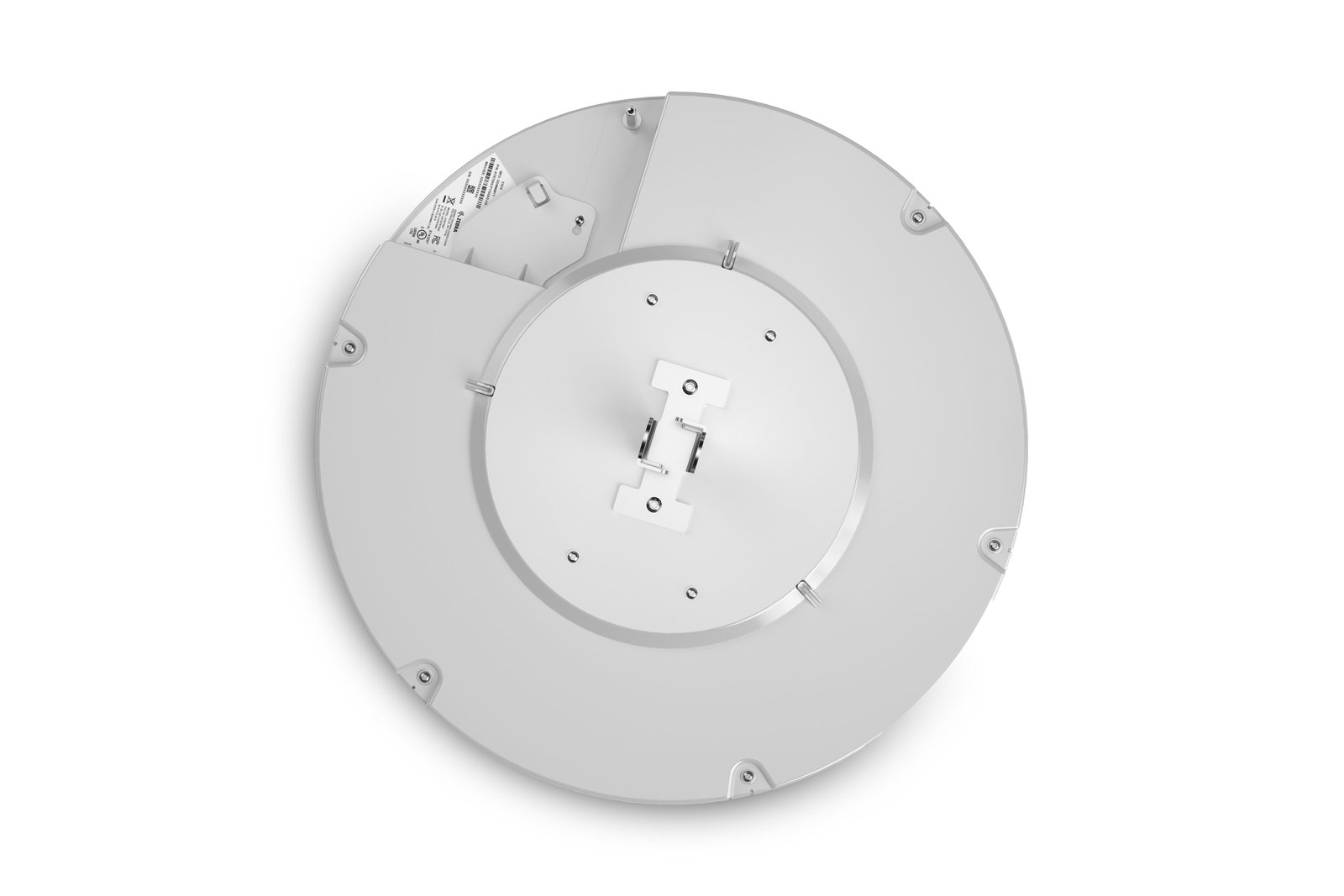
Mounting. A built-in pole mount or a VESA 75 or VESA 100 bracket holds it overhead. The reader is 482.6 mm across, 161 mm high and weighs 5.03 kg, so check what the ceiling or beam can carry.
Remote management. The management interface finds and configures ATR7000 readers on the local network. You can upgrade the firmware over the web or remotely. Connections use TLS 1.2 with FIPS 140-2 Level 1 security, over IPv4 or IPv6.
Indoor use. The ATR7000 is sealed to IP51 and works from -20°C to +55°C at 5 to 95% humidity, non-condensing. That suits a dry hall, including the inside of a loading bay; an open yard needs a different reader (see below).
Zebra ATR7000 technical specifications
| Specification | Zebra ATR7000 |
|---|---|
| Class | Overhead UHF RFID reader with integrated steerable phased-array antenna, for real-time location (RTLS) |
| Beam scanning | Azimuth 0-360°, elevation 0-60° |
| Location accuracy | Typically better than 0.6 m; with CLAS 0.6 m (R50), 1.2 m (R95) |
| Directionality | Four or six reporting zones per reader |
| Air protocol | EPCglobal UHF RFID Class 1 Gen2 / ISO 18000-63 |
| Frequency | 865-868 MHz (EU, EN 302 208), per Zebra’s EU declaration of conformity |
| Receive sensitivity | -88 dBm maximum |
| Location software | CLAS, licensed: RTLS configuration server and location analytics; tag ID and location published on a Kafka interface |
| Network | 10/100 Base-T Ethernet (RJ45); IPv4 and IPv6; DHCP, HTTPS, FTPS, SFTP, SCP, SSH, HTTP, FTP, SNMP, NTP |
| Host interface and APIs | LLRP v1.0.1; .NET, C and Java EMDK; Zebra RFID API; IoT Connector (MQTT, REST) |
| Management | RM1.01 (XML over HTTP/HTTPS, SNMP); RDMP (ISO 24791-3); web and remote firmware upgrade; Zebra Resonate RFID Reader Management |
| Security | TLS 1.2; FIPS 140-2 Level 1 |
| General purpose I/O | Two inputs, three outputs, opto-isolated (marked reserved) |
| Power | PoE+ (802.3at) or +24 V DC supply rated 3.25 A; 24 W maximum, under 4 W idle |
| Mounting | Built-in pole mount; VESA 75 or VESA 100 |
| Size and weight | 482.6 mm diameter x 161 mm high; 5.03 kg |
| Environment | Operating -20°C to +55°C; storage -40°C to +70°C; humidity 5-95% non-condensing |
| Sealing, ESD and vibration | IP51; ±15 kV air discharge, ±8 kV direct and indirect; MIL-STD-810F random vibration, 6 G rms |
| Operating system | Linux |
| Warranty | 1 year from shipment; Zebra recommends Zebra OneCare and On-site System Support |
Download the Zebra ATR7000 spec sheet (PDF)
Zebra ATR7000 part code
The Zebra ATR7000 comes in the configuration below, and we pick the one that fits your work, with the tags to suit your items. Tell us the task and we specify the part code. Units are usually from stock or within a few days, depending on regional availability.
| Model / config | Part code |
|---|---|
| Premium asset tracking reader, integrated antenna array, supports CLAS (RTLS) operation, EU version | ATR7000-P2100A0-E8 |
ATR7000, FX9600 or ST5500: which fits your site?
Choose the Zebra ATR7000 when you need to know where tagged items are inside a hall or zone. Sometimes you only need to know that an item passed a point: a dock door, a goods-in bay or the door between a stockroom and a shop floor. A fixed reader at that point does the job, and no CLAS location licence is needed.
The Zebra FX9600 fixed RFID reader covers a wide dock door or several lanes. It has 4 or 8 ports for antennas chosen to fit the opening and 4 inputs and 4 outputs for lights, sensors and gates, in an IP53 housing. For a single doorway, the Zebra ST5500 transition RFID reader puts the reader and antennas in one housing and reports the direction of travel, according to Zebra.
Zebra’s sheet lists no external antenna ports for the ATR7000 (the array is built in), so plan on adding readers rather than antennas. The sheet gives no read range or transmit power either, so the number of readers a hall needs comes out of the site survey.
For an open yard, a quay or an outdoor gate, IP51 is not enough. Zebra’s FXR90, sealed to IP65 and IP67, is the reader to look at there.
What Sirap does with an ATR7000 order
Sirap is a Zebra RFID Specialist, and that covers the ATR7000.
Before we quote ATR7000 readers we survey the site and test reads with your own tagged goods. The survey covers the ceiling height, the area and whether you need items located in zones or only their direction at a door. Tags are chosen with you, because a tag on metal or on a liquid reads differently from one on a carton. We mount, cable and commission the readers ourselves, then test the reads at handover.
Frequently asked questions about the ATR7000
Does the ATR7000 need a software licence?
For site-wide location, yes. A Zebra ATR7000 on its own tracks tags through its four or six zones. Calculating item locations across a site and sending them to your WMS takes CLAS, Zebra’s licensed location software. The tags are passive, so there are no tag batteries to replace.
Will the ATR7000 work with our WMS or ERP?
Yes, if your WMS or ERP can take LLRP, MQTT, REST or a Kafka stream. The Zebra ATR7000 speaks LLRP over Ethernet, and Zebra’s IoT Connector sends its data over MQTT or REST. With CLAS, tag IDs and locations are published on a Kafka interface. Ask whoever maintains your WMS or ERP which of these it accepts.
Who supports the ATR7000 in Malta if it fails?
We supply, install and support the Zebra ATR7000 in Malta. The ATR7000 carries Zebra’s one-year warranty from shipment. Zebra recommends OneCare and On-site System Support; we quote Zebra OneCare with the readers.
Talk to a Sirap engineer about the ATR7000
Tell us which items you need to track and where, and we will specify the ATR7000 readers and the tags for your site.
Request a quote for the Zebra ATR7000 or call (+356) 2138 5911 · Price on request
After you send the form, we arrange the site survey, then send the quote.

Related Products


Talk to us about your next project
Tell us what you need to run, code, label, store, protect or automate. Our technical sales team in San Gwann replies within one working day, in Maltese or English.
Who you deal with:
- Part of Maltese IT and industry since 1981
- A sales team that specifies the right part codes
- A technical team that installs, tests and repairs
- Engineers on site anywhere in Malta and Gozo
- Zebra Premier Business Partner, Synology Platinum Partner
- Distributor for Eaton and Domino in Malta
What happens next?
We reply within one working day
An engineer visits if the site needs a look
You get a quote with part codes, installation and warranty