Most RFID projects come down to one of three jobs: counting what you hold, recording what passes a door, or finding where something is. Name the job first, and the choice of tags, readers and software follows from it.
I spent 22 October 2026 at Zebra’s RFID partner forum, and much of the day was about large retailers and their RFID mandates. These are the RFID trends 2026 has brought that matter to a smaller business, each with its own section below:
- Growth beyond clothing: food, parcels, pharmaceuticals, hospitals and factories.
- The 915-921 MHz upper band, adopted by 35 European countries by RFID Journal’s 2024 count, Malta among them.
- The EU Digital Product Passport, which does not make RFID compulsory in anything the Commission has published so far.
- RFID and Bluetooth tags working side by side on the same site.
Sirap is a Zebra Premier Business Partner and a Zebra RFID Specialist in Malta, and its RFID work here runs from tree tagging to tool audits. Its RFID readers, antennas and tags page lists the Zebra range it supplies, and RFID quote requests go to Sirap’s contact page or (+356) 2138 5911.
Is RFID still growing in 2026?
Chip shipments fell in 2025, and the growth discussed at the forum is in other sectors. The RAIN Alliance, the industry body for UHF RFID, counted 52.8 billion tag chips shipped in 2024, and the four leading tag makers shipped 42.7 billion in 2025. It put the 2025 drop down to the semiconductor inventory cycle and retailers running down stock, with tariff uncertainty hitting US apparel and general retail.
Clothing and general retail still take a large share of those chips. The growth Zebra talked about at the forum was in food, parcels, pharmaceuticals, hospitals and factories. There the tag goes on a crate, a uniform or a tool. The RAIN Alliance names similar sectors.
Ask how many hours a week your staff spend counting stock, checking crates or looking for tools that could carry a tag.
Do you need to count, track or locate?
Most RFID projects we quote fall into one of three jobs. Counting means staff walk with a reader and take stock of what is there. A fixed reader that records what passes a door, a till or a gate is tracking. Locating is the job for overhead readers, which work out where a tagged item is in a room. Each job needs different hardware, and Zebra describes its range in similar terms.
Counting with a sled or an RFID handheld
A count with RFID reads every tag in range at once, without a line of sight. The Zebra RFD40 RFID sled clips onto a Zebra handheld or a phone and reads more than 1,300 tags a second, about 6 m away on Zebra’s figures. The TC22R handheld has a reader built in, for teams that want one device, and every TC501 carries a short-range reader that finds a tagged item within about 2 m.
Emirates reported in 2019 that it had tagged its cabin emergency equipment: checking the 820 pieces on an A380 took 350 minutes by hand and takes 11 minutes with RFID. In shops, RFID Journal’s report on a 2018 study by the Auburn University RFID Lab and GS1 US cited store inventory accuracy of about 95% with RFID. Earlier studies had found about 63% without it.
Tracking at a door, a till or a gate
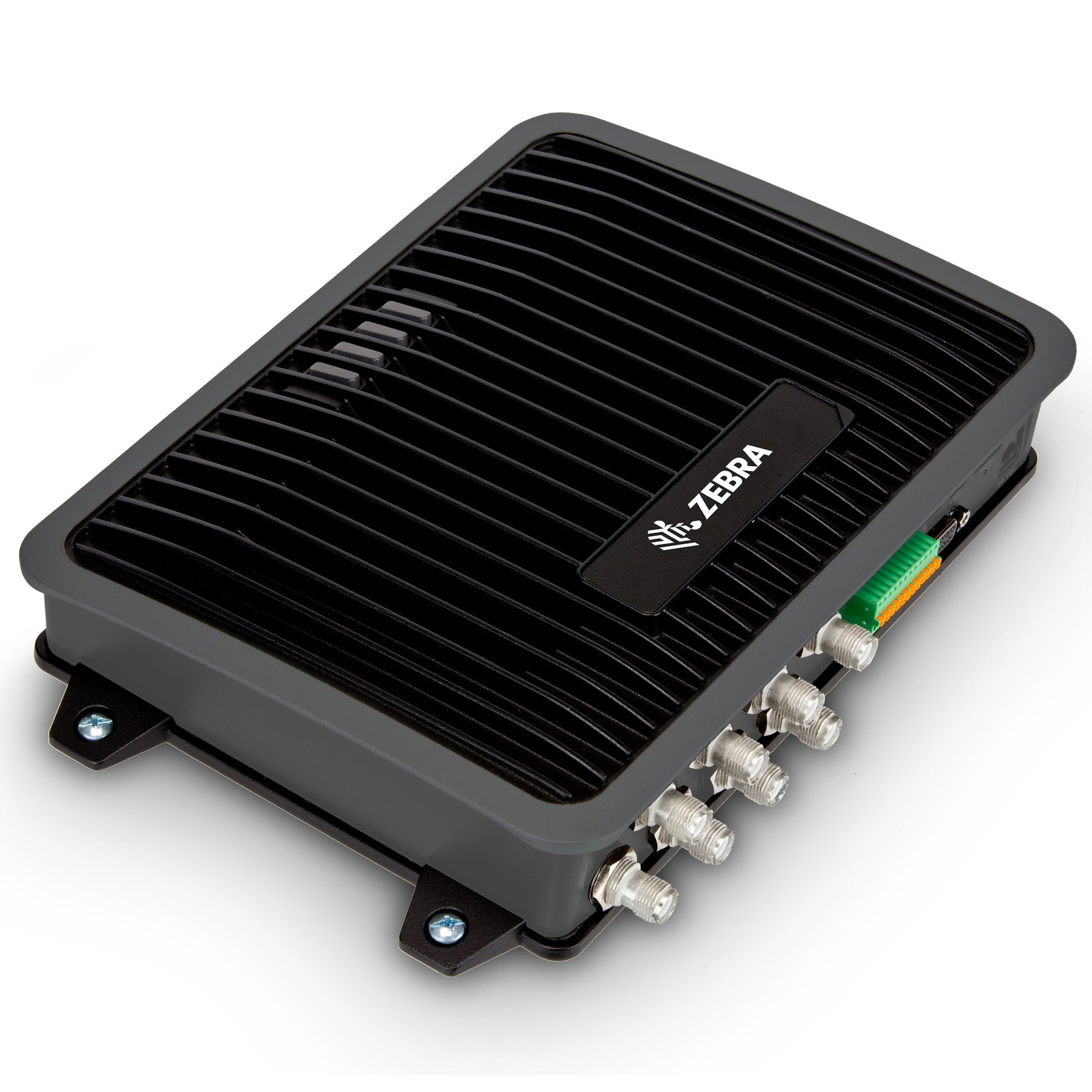
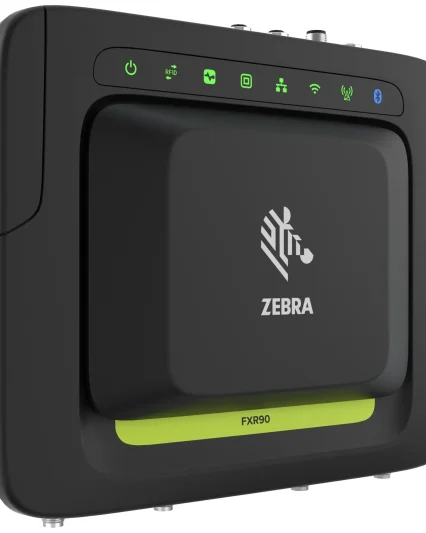
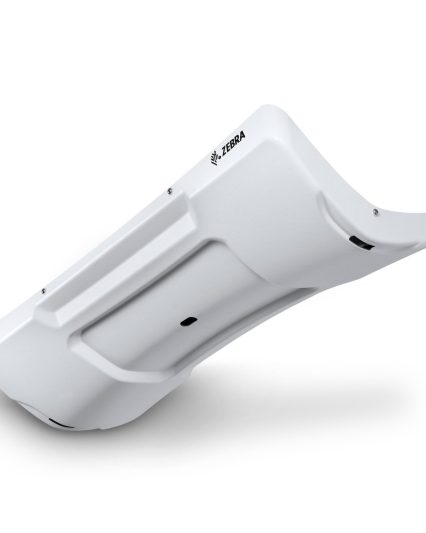
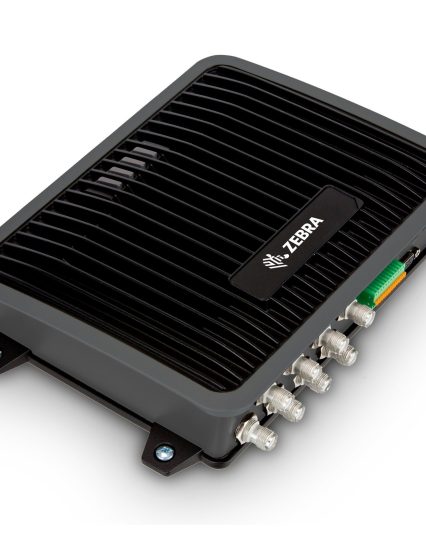
A fixed reader records each tagged pallet, crate or roll cage as it passes, so nobody scans it. The Zebra FX9600 fixed RFID reader drives four or eight UHF RFID antennas placed around a wide dock or a conveyor. The ST5500 transition reader hangs over a single doorway and, according to Zebra, reports which way the goods went. Outdoors, at a quay or a yard gate, the FXR90 ultra-rugged reader is sealed to IP65 and IP67 and rated from -40°C to 65°C.
Returnable crates are the clearest case. Reynolds Catering Supplies in the UK put readers above its 19 dock doors to read crates going out and coming back. RFID Journal reported in 2018 that it saved about £150,000 on replacement totes in roughly the first year.
Locating with overhead readers
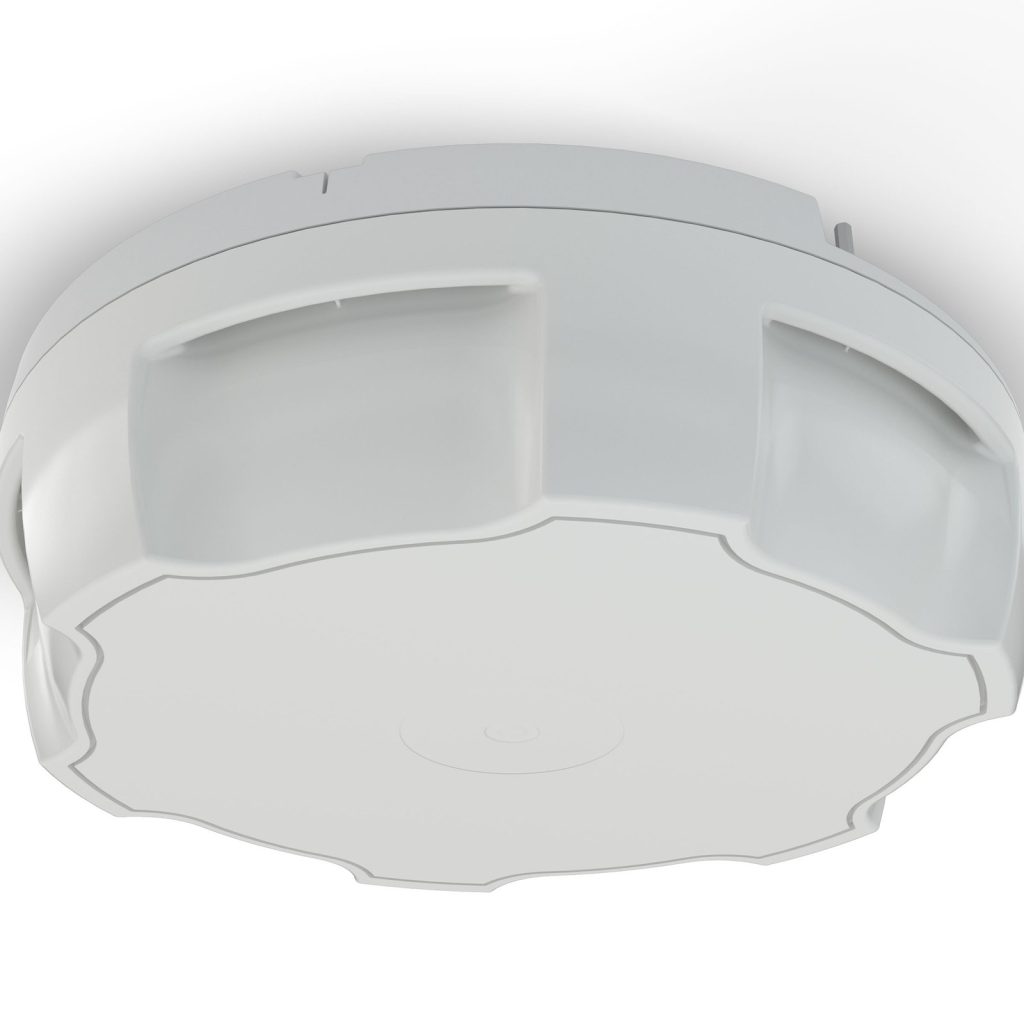
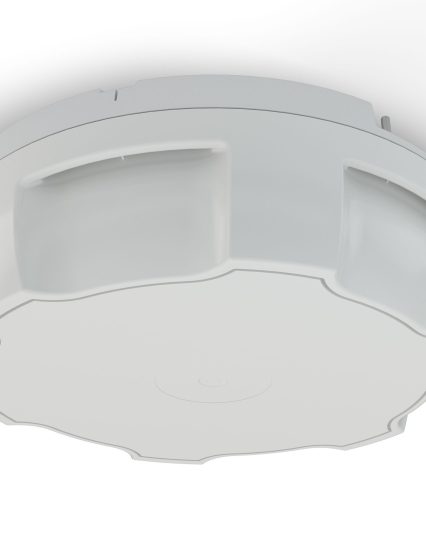
A locating system shows where a tagged item is now, not only that it passed a door. The ATR7000 overhead reader scans in every direction beneath it, and, on Zebra’s figures, its location software typically places a tag to within about 0.6 m. It is an indoor reader for dry sites, mounted high above the floor, and the location software is part of the quote.
Where is the upper band allowed in Europe?
RFID Journal reported in August 2024 that 11 more European countries, Malta among them, had adopted the 915-921 MHz upper band for UHF RFID. That brought the total to 35. The same report said Germany, Greece and the Netherlands were staying on the lower band only. The band was set up by ETSI, the European standards body, and each national regulator decides which channels are open.
A reader in the upper band may transmit at 4 W, against 2 W in the classic 865-868 MHz band. RFID Journal reports up to 40% more read range.
Should you plan for the upper band in 2026?
A reader uses the upper band only if its firmware supports those channels. Not every Zebra model sold in the EU is cleared for them yet, so the model you choose needs checking. We commission each reader on the band that the national rules and the reader’s firmware allow.
We plan every read point to work on 865-868 MHz, so the upper band adds range where it is available and nothing depends on it. If your tagged goods also go to a lower-band country, the readers at the other end will run on 865-868 MHz.
Will the Digital Product Passport make RFID compulsory?
Not on anything the Commission has published so far. The EU’s Digital Product Passport, set up under the Ecodesign for Sustainable Products Regulation (EU) 2024/1781, needs a data carrier on the product that links to the passport. The European Commission’s page on the passport for textiles gives a QR code as the example and does not mention RFID.
Textiles and apparel are one of the priority product groups under the Commission’s working plan. The delegated act that sets their rules is planned for Q4 2027, and the Commission says the timeline may change. Other product groups follow their own acts.
RFID helps with the record behind a passport: which batch went into which shipment, read without scanning. We would plan a passport around a printed code first, as in our guide to GS1 QR codes and Sunrise 2027, and add RFID where it also saves counting time.
Should you use RFID or Bluetooth tags?
Use passive RFID for large numbers of low-cost items read at known points, and Bluetooth Low Energy (BLE) tags for fewer, valuable assets that must report on their own or log a temperature. A passive RFID tag has no battery and stays silent until a reader asks for it. A BLE tag carries a battery and transmits at intervals, which costs more per tag.
Zebra’s view at the forum was that many sites end up with both. A pharmacy fridge that needs a temperature record is a BLE job; counting the boxes inside it is an RFID job. If you are weighing the two, list your assets by value and by how often they move. A few valuable assets that must report on their own point to BLE. Many low-cost items read at known points point to RFID.
What RFID does not do on its own
RFID does not tell you where something is unless a reader can see it. A door reader records that a pallet passed; once it sits in the racking, only the next count or an overhead reader finds it again.
Metal and liquids weaken an ordinary RFID label, so tools, cans and bottles need tags made for them. The tag choice comes from a test on your own items. Where few items move and stock is counted twice a year, a barcode scanner and good labels cost less and do the job, and our labelling and barcoding page covers that route.
The reads also have to land somewhere useful. A project with no system that acts on the data, and no named person who owns the result, produces a log that nobody opens. The retail speakers at the forum made the same point: a store project needs an owner and backing from operations, finance and loss prevention.
How Sirap starts an RFID project
Sirap starts an RFID project with a read test on the customer’s own tagged items, before readers or sleds are ordered in volume. After the test, Sirap’s technical team installs and commissions the readers, sets the band and pairs the sleds to the handhelds.
For a government environment agency we supplied hard RFID tags, one per tree, and the Zebra handhelds and sleds the field staff read them with. For other customers we have tagged tools and run the audits that check them.
Depending on the project, we connect the reads to your ERP or warehouse management system (WMS) ourselves, work with your software partner, or hand the reader interface to your IT team. Zebra’s standard warranty applies, with claims handled through our technical team, and we quote Zebra OneCare service plans on request.
When you ask for an RFID quote, we reply within one working day with the questions we need answered: what is tagged, how many items, where they must be read and which system takes the reads. If the site needs a look, an engineer visits, anywhere in Malta and Gozo. We answer Monday to Friday 8:30 to 16:30.
Before you call (+356) 2138 5911, pick one job and time it today: a full stock count, a door check or a search for a missing item. That time is the first figure we need to judge whether RFID will pay for itself.
Questions about RFID in 2026
How far does a Zebra RFID sled read?
A standard RFD40 sled reads tags about 6 m away on Zebra’s figures, and the long-range RFD40-M Premium Plus reads up to about 24 m. Metal, liquids, tag type and how the tag faces the sled shorten the real distance, so we measure it on your own items.
Does RFID replace barcodes?
No. An RFID label can carry a printed barcode and text as well, so anyone without a reader can still scan it. RFID printers such as the Zebra ZD621R print the label and encode the tag inside it on the same printer. Zebra also supplies the labels themselves, as ZipShip RFID labels and inlays.
How do RFID reads reach an ERP or WMS in 2026?
Through an integration. Zebra’s FX9600 and FXR90 fixed readers can send filtered tag events over MQTT or HTTP. Zebra documents no direct SAP connector, so an ERP or WMS takes the events through middleware or its own endpoint. We plan the receiving side with your IT team or your software supplier before the readers go up.
Does the upper band work with every Zebra reader?
No. A Zebra reader uses the 915-921 MHz upper band only if its firmware supports those channels, and not every model sold in the EU is cleared for them yet. Every read point we plan also works on 865-868 MHz, so a reader without the upper band still does the job.
Which RFID job should a smaller business start with?
A count is the easiest RFID job to trial: an RFD40 sled clips onto a handheld or a phone, so a test needs no cabling or fixed install. Tracking at a door needs a reader, antennas and cabling at each read point, and locating needs overhead readers and the location software. Whichever job costs your staff the most hours is the one to time first.
Featured Products in this article
-
Zebra FXR90 Ultra-Rugged Fixed RFID Reader
Read more -
Zebra RFID Antennas
Read more -
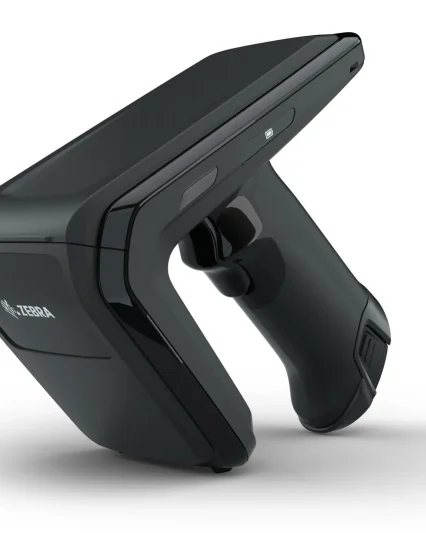
Zebra RFD40 UHF RFID Sled
Read more -
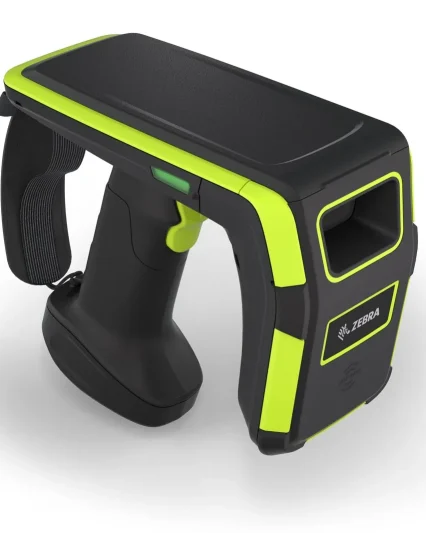
Zebra RFD90 Ultra-Rugged RFID Sled
Read more -
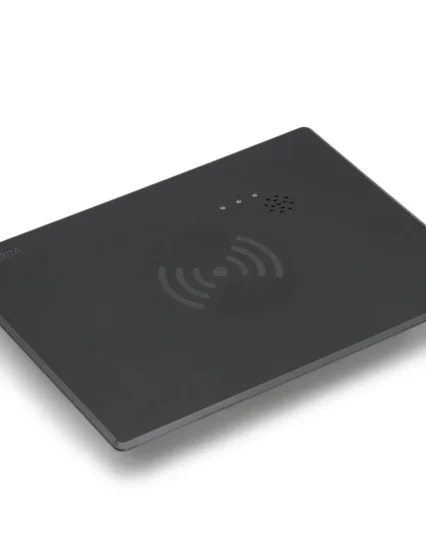
Zebra FXP20 Point-of-Sale RFID Reader
Read more -
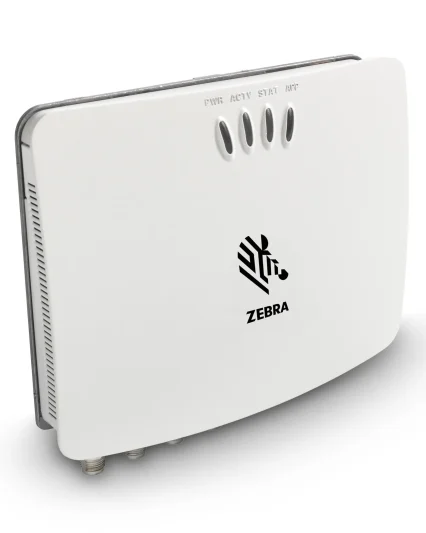
Zebra FX7500 Fixed RFID Reader
Read more -
Zebra ATR7000 RFID Locationing Reader
Read more -
Zebra ST5500 Transition RFID Reader
Read more -
Zebra FX9600 Fixed RFID Reader
Read more -

Zebra TC22R Mobile Computers with RFID
Read more

Kurt Paris
Kurt Paris, Director, Technology & AI Advisor, Sirap. 20+ years in IT solutions and software engineering. MSc in Software Engineering, Zebra-certified.